Latest news

1st April 2013

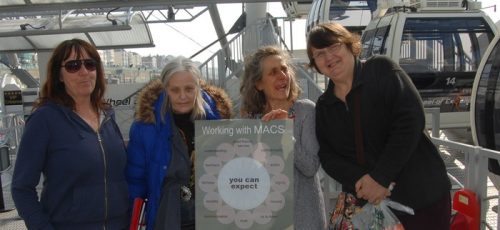
MAPS has merged with Money Advice and Community Support (MACS)

On 1st April Money Advice Plus Services merged with Money Advice and Community Support.

Money Advice and Community Support (MACS), established as a charity in 1995, provides an invaluable service for vulnerable people struggling with their finances in Brighton and East Sussex.

“We are confident that combining the expertise and resources of both organisations will give us the opportunity to provide even more effective support for residents needing money and debt advice, including greater support with money management as we move towards the implementation of universal credit, and engage with the complexities of welfare reform”... says Gerry Plater, Operations Manager.

While Sue Pattenden, Advice Services Manager adds “We can also confirm that the service will continue to be provided by our now well established advice team in Eastbourne (Jeanette, Dan, Sue, Monita and Alan). We are keeping the MAPS brand and service spec, as the feedback we have received confirms that this is a recognised and trusted service within the advice sector”.

Please visit the MACS website for more information about the company and their work.


3rd December 2012

MAPS raises money for Myasthenia Gravis Association

Two of MAPS' money advisers have taken part in a 3 mile run along Eastbourne dressed as Santa to raise money for the Myasthenia Gravis Assocation. Over £150 was raised by MAPS for the charity and a great time was had by all - apart from the sore legs the day after...

More information on the Myasthenia Gravis Association can be found here.


25th October 2012

MAPS joins Twitter

MAPS is now on Twitter - you can follow or message us @MAPS_Eastbourne


04 April 2012

Women's Aid and MAPS launch Guidance for Professionals Supporting Survivors with Financial Issues

Women’s Aid and MAPS (money advice plus services) have launched new guidance for those working with survivors who have experienced financial abuse as part of their joint Domestic Abuse and Money Education (DAME) project. The guidance, which is free to download from www.womensaid.org.uk recognises that financial abuse is a common feature of domestic abuse and that many survivors face financial difficulties as a consequence of the abuse they experience.

Nicki Norman, Deputy Chief Executive of Women’s Aid said: “Financial abuse takes many forms and can include restricting access to money, not being allowed a bank account, stealing money from you, denying access to money for basic things such as food and travel, running up debts in your name and stopping you from getting or keeping a job.

These can act as a barrier to making the final decision to leave an abusive relationship, and to making a fresh start after escaping from abuse. We are aware that a number of different advice packs for those experiencing money and debt problems are already.  However, our aim is to give specialist advice within the context of domestic and sexual violence, including potential risks to survivors’ safety.”

The DAME project aims to increase the knowledge and confidence of professionals when assisting survivors who are experiencing financial difficulties and learning from the project has influenced the development of the DAME Guidance for Professionals Supporting Survivors with Financial Issues.

The guidance aims to provide a step by step guide on how to assist survivors with financial issues and debt.  It is not intended as a substitute for professional money and debt advice, but provides a general overview of the issues.

The aims of the guidance are to:

  • promote understanding of the particular financial issues facing victims/survivors of domestic and sexual violence and abuse;
  • provide basic knowledge of the ways to address financial issues, with particular attention to safety: i.e. not putting survivors at increased risk;
  • help those working in survivor support services to develop the confidence to respond appropriately to victims who have money problems, and to know when to refer them on to specialist advice services;
  • provide practical tools to support agencies working with survivors, and the survivors themselves.

The guidance is equally appropriate for professionals working in domestic and sexual violence agencies or money advice agencies.

An online version of the guide can be viewed here

9 August 2010

EDF Energy Trust awards funding for new money advice project

MAPS is delighted to announce that EDF Energy Trust has awarded funding for an exciting two year money advice project to start in October 2010.  The project’s beneficiaries will be people living in low-income households with many being financially excluded. 

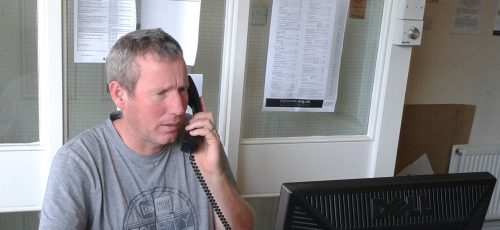
A dedicated Project Officer, who will be an experienced money adviser, will advise people with money and debt problems via a telephone service.

The project will promote self-help and empowerment to build people’s skills and confidence in managing money and dealing with debts. There will be a focus on fuel poverty and helping to reduce energy debts.

The Project Officer will co-ordinate the project and work with a network of referral partners which include housing associations, local credit unions and other support agencies. The officer’s role will be to promote the project, ensure that people are referred to the project for advice, and raise awareness of the help available from EDF Energy Trust and other utility trust and grant funds.

The project aims to complement the existing financial inclusion support and services available from the project partners. Referrals for  advice will be made for people living in  London, especially the six most deprived inner London boroughs  of Hackney, Tower Hamlets, Newham, Islington, Haringey, Lambeth, Waltham Forest, and Lewisham , and Kent, Sussex and Surrey.

Money and debt advice will be provided to around 250 clients each year who will receive help to budget and review their income and expenditure, check welfare benefits and tax credit eligibility, make cost savings, identify priority and non priority debts and agree an action plan to improve their situation.

Clients will also be advised about saving money on energy bills, getting the best energy tariff, and will be signposted to local and national sources of energy advice and information.  Applications for financial help will also be made to EDF Energy Trust and other trust funds.